Project Overview:
PCA joined the Embodied Carbon Reduction Challenge to kick-start our efforts in understanding, measuring, and reducing embodied carbon. Leland House was our first test case.
PCA was privileged to team up with 2Life Communities and partners to design Leland House, an affordable senior living community. Designed to Passive House standards, Leland House brings improved health, economic, and environmental benefits to its residents and addresses the important objective of minimizing its carbon footprint.
Reducing embodied carbon was a primary goal of the project. However, without access to industry tools and resources, the team relied on estimations and intuition early in the design process. Since joining the Challenge, we’ve been able to measure the value of the project’s carbon reduction measures and educate the team on the carbon impacts of decisions made through construction.
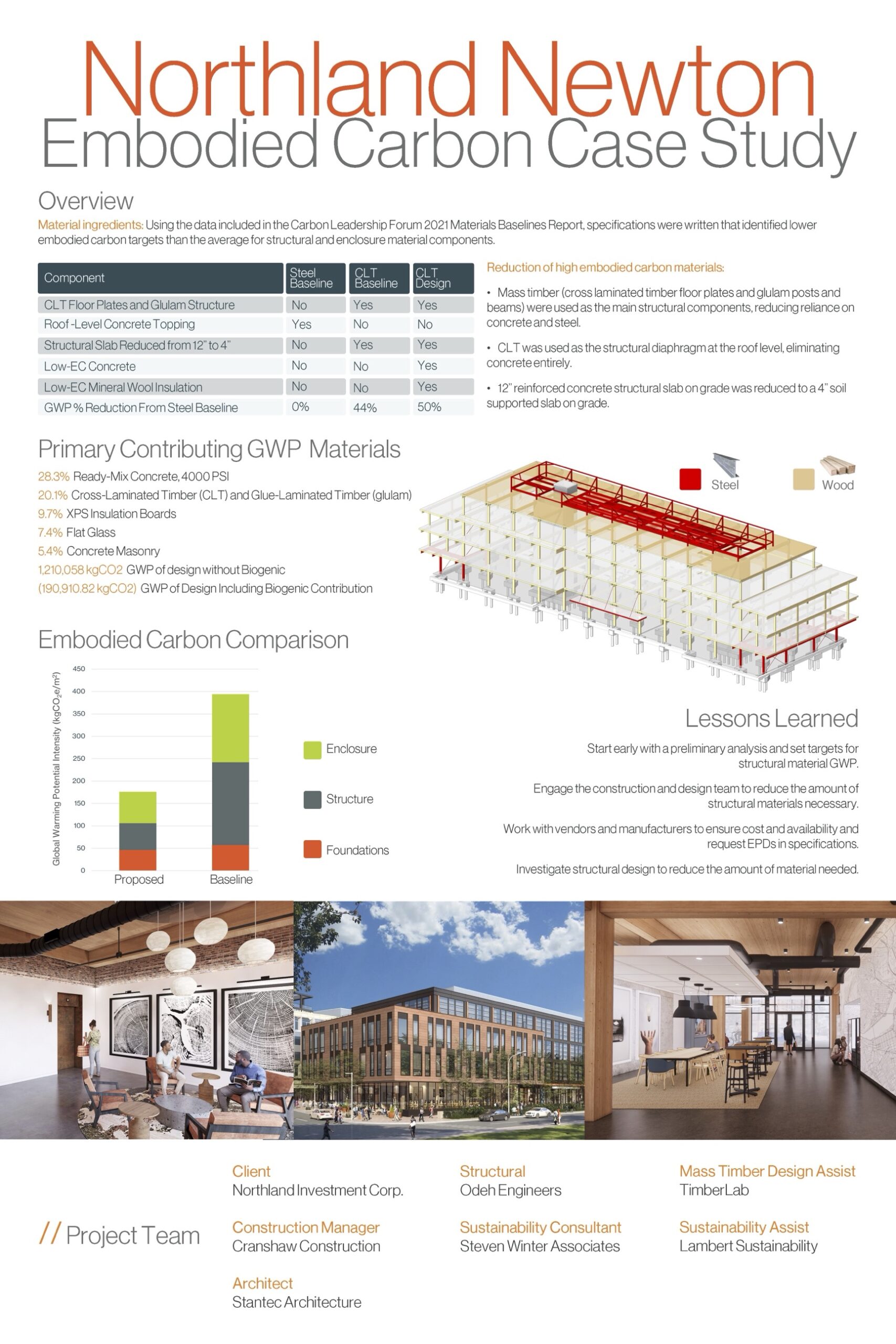
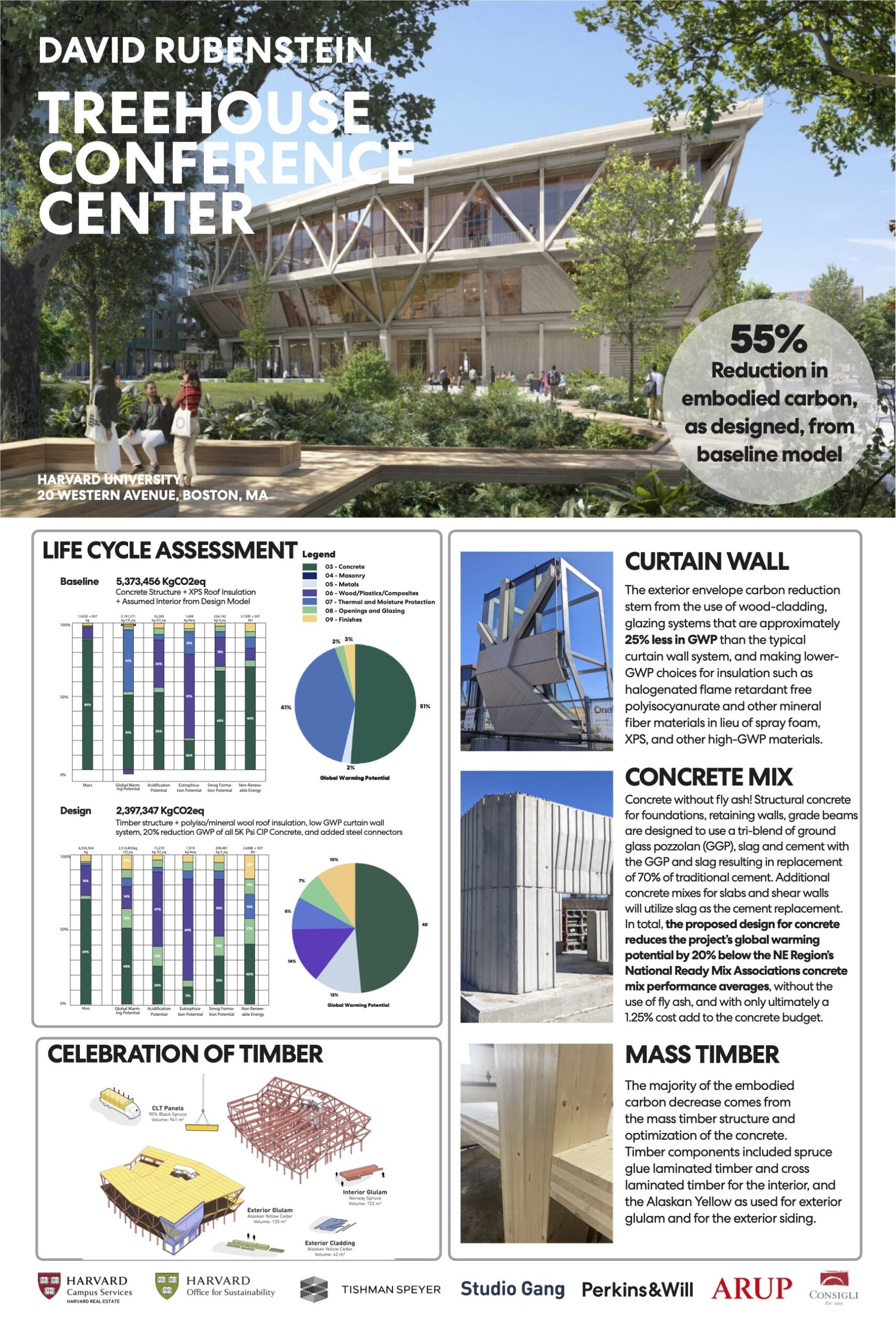
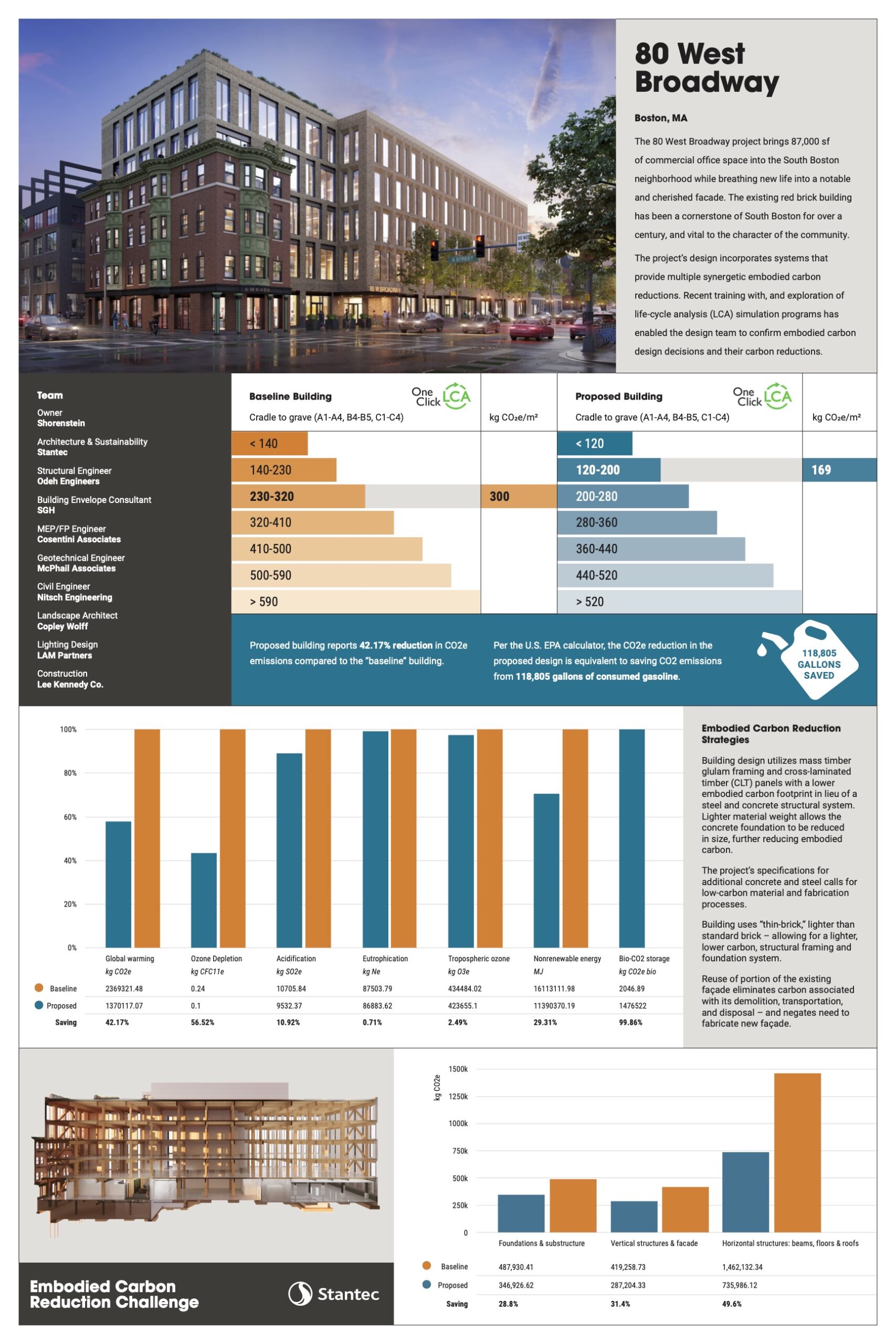
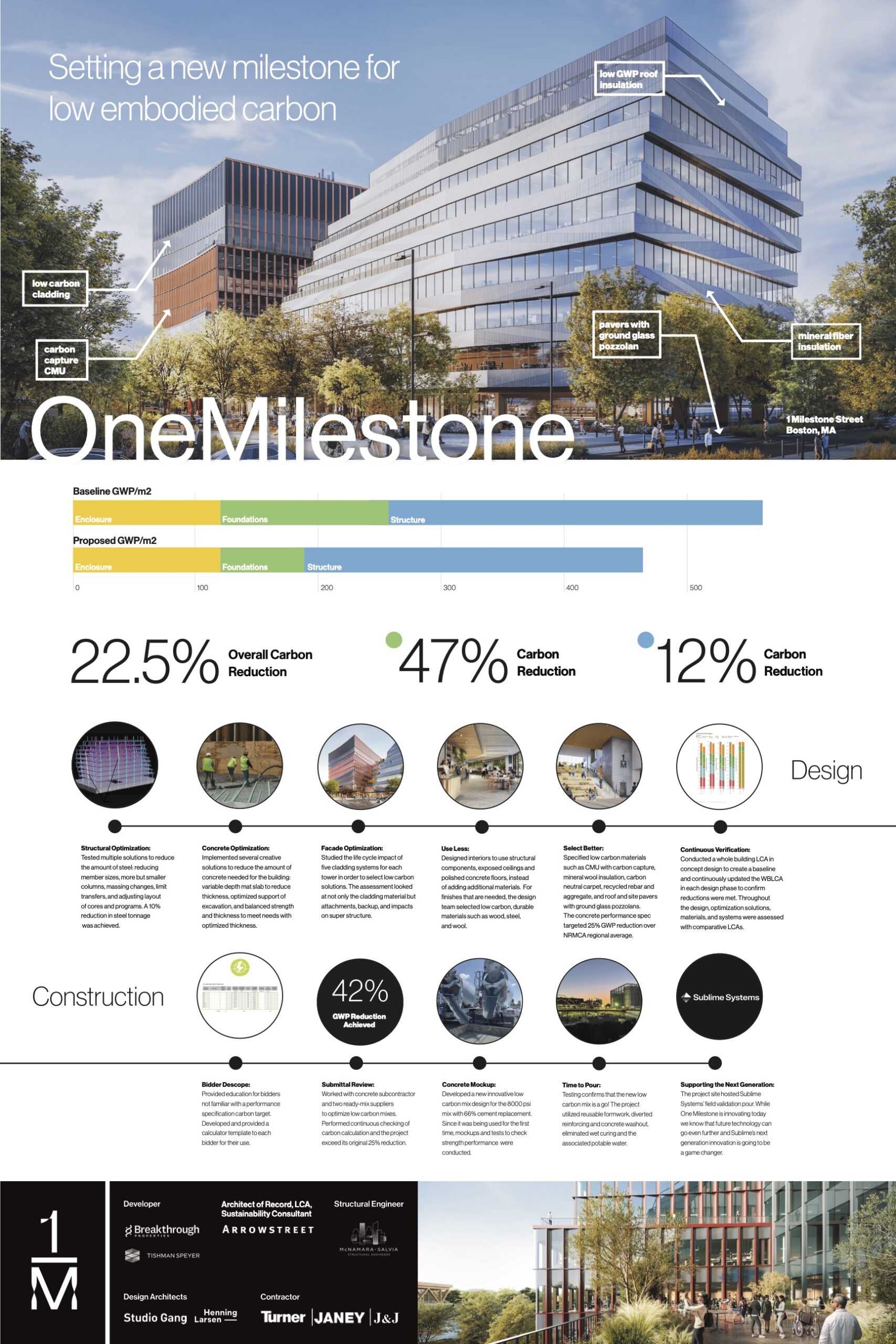
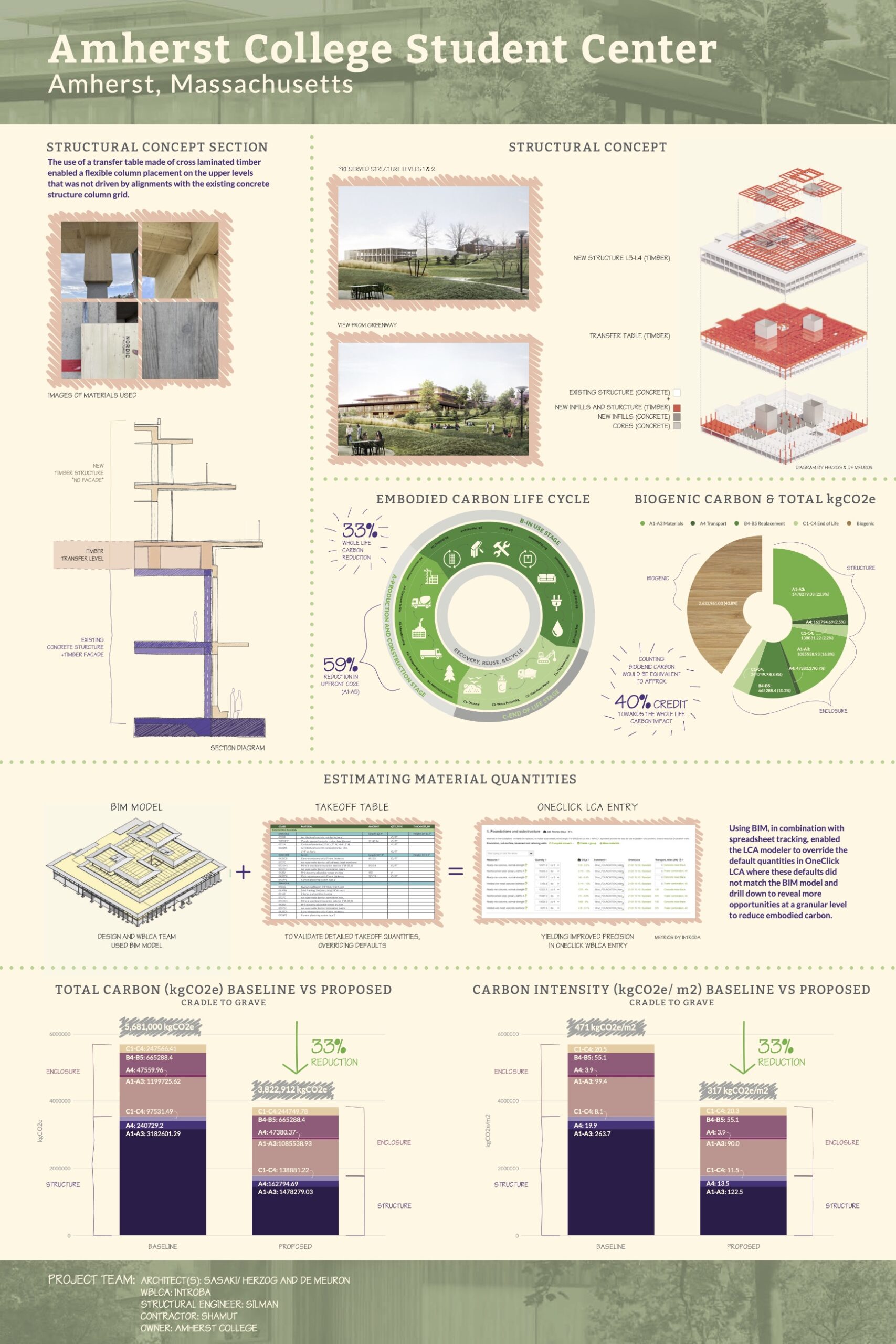
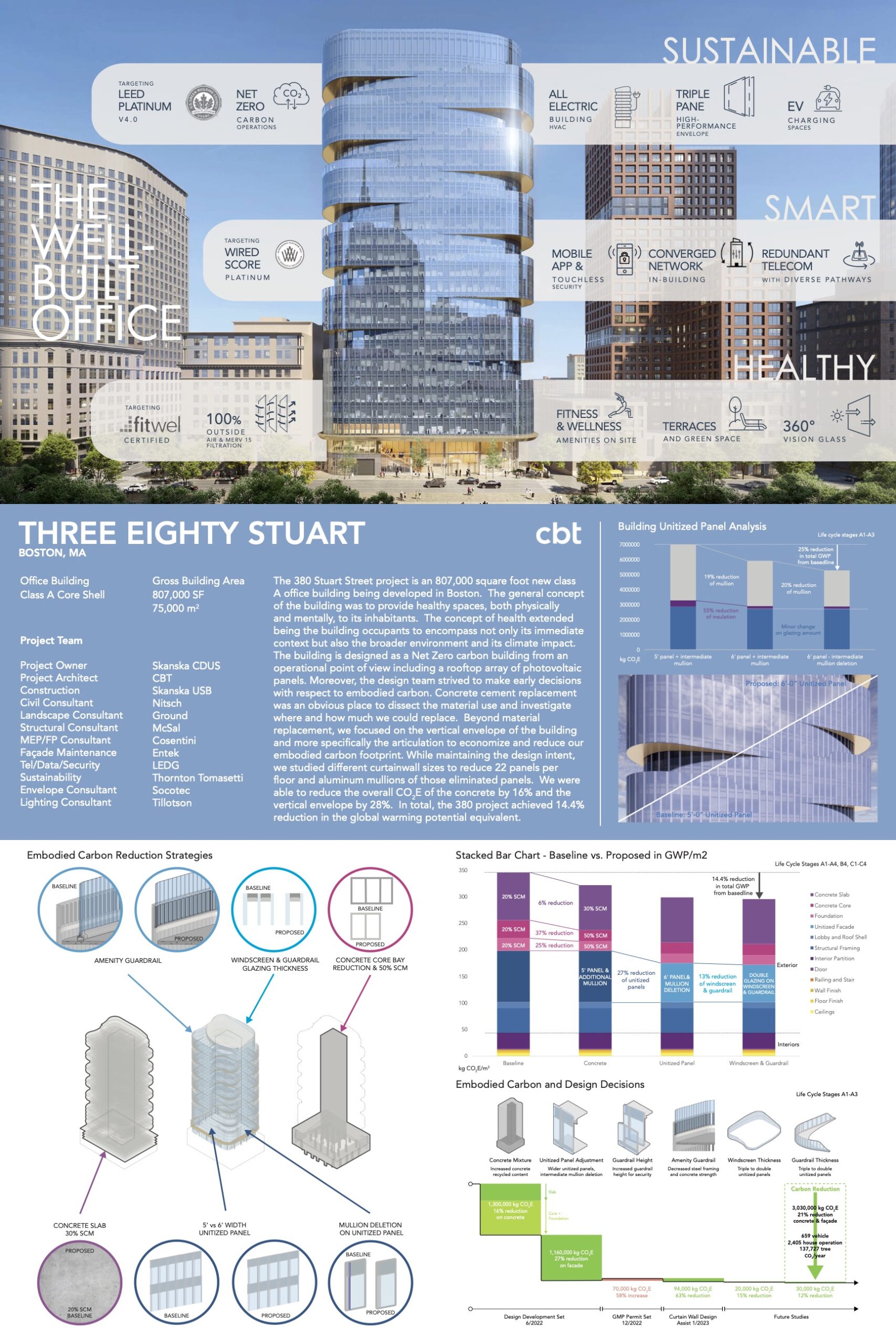
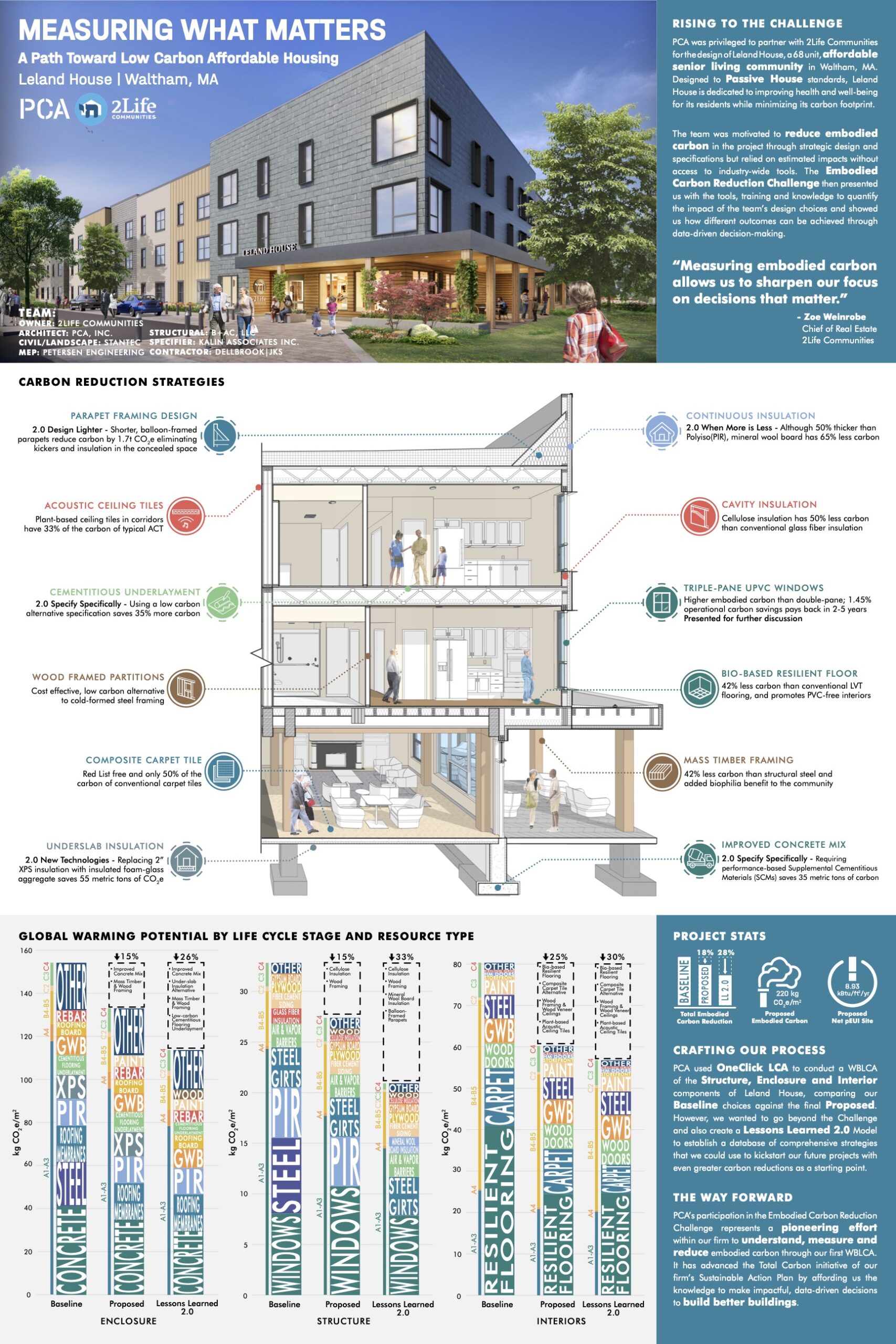
Our carbon reduction strategies included low-carbon structural design solutions such as: mass timber columns and beams, wood-framed load-bearing walls, and wood trusses. Improved concrete mix designs included SCMs to reduce embodied carbon. Cellulose cavity insulation was used as a sustainable alternative to fiberglass insulation.
Additional project goals included specifying PVC free and Red List free interior finishes, while providing the community with an enhanced connection to nature through biophilic patterns, textures, and materials. Bio-based polyurethane resilient flooring provided an alternative to pervasive luxury vinyl tile. Low-carbon, alternative carpet tiles, plant-based acoustic ceiling tiles, wood veneer ceiling finishes, and exposed timber columns and beams contributed to the holistic design approach of the project.
Overall, Leland House demonstrated an 18% reduction in embodied carbon over baseline, including a: 15% reduction in the structure, 15% reduction in the enclosure, and 25% reduction in the interiors.
We found that Whole Building Life Cycle Assessment (WBLCA) provides us with the knowledge and data to reduce embodied carbon and help combat climate change.
Replicability:
Through the Challenge, we’ve gained access to the tools and training to perform life cycle assessments across various systems and scales. This in turn affords us the knowledge and data to impact design decisions on real-world projects.
Replicability was built into our process from the start. Upon joining the Challenge, one of PCA’s goals was to establish a workflow, understanding, and database that we could apply to the next project, so we could hit the ground running and target greater carbon savings. To this end, we created a Lesson Learned 2.0 Model to track carbon reduction measures that we might apply to the next project.
Selecting an affordable housing project, such as Leland House, was intentional, as it targets a highly replicable case study. The technologies we employed are common and well understood by the building industry at various scales and applications; wood-framed load-bearing walls and wood trusses provide cost-effective, low-carbon solutions to meet our most basic needs.
Concrete is a material we see on every project, and it was the largest contributor to embodied carbon emissions at Leland House. Here we learned a valuable lesson around providing performance-based specifications. Our specification allowed for up to 50% SCMs, but without specifying any minimum performance values, we wound up leaving another 35 metric tons of carbon on the table that could have been further reduced. We included these savings in our Lessons Learned 2.0 Model to demonstrate how to do better on the next project.
All the measures included in our proposed model successfully survived the VE process and are currently being constructed, further evidence of the replicability and cost-effectiveness of the strategies employed at Leland House. Design is inherently an iterative process, and the lessons we learned in our first WBLCA will form the foundation for the next project.
Cost Effectiveness:
LCA tools provide us with the knowledge and data to reduce embodied carbon and help combat climate change. The more we, as designers, request manufacturers’ EPDs and demand low-carbon alternatives for the most impactful materials, the more the costs will come down. In many cases, there are cost-effective, low-carbon solutions available to the marketplace.
WBLCA allows us to identify our most significant embodied carbon contributors (e.g., concrete, flooring products, steel, foam insulations, etc.) and focus our resources on targeting their reductions.
Furthermore, by taking a holistic design approach, we can identify synergies among project goals, such as eliminating PVC from the interiors and providing biophilic designs, while also reducing embodied carbon, all with a cost-competitive product. At Leland House, we used a bio-based polyurethane resilient flooring that provided a 42% reduction in carbon over ubiquitous LVT flooring. Resilient flooring was our second-highest contributor to embodied carbon. When high-impact design decisions can satisfy multiple project goals, they are more likely to remain part of the project, and LCA allows us to bring the carbon data to the table. Carbon tools and data help to illuminate these solutions.
Red List free composite alternative carpet tiles were priced competitively and saved the project 50% of the carbon of traditional carpet tiles. Similarly, plant-based ceiling tiles provided 1/3rd of the carbon of the typical ACT without an uptick in cost.
Gypsum board and paint were two of the larger contributing materials that we were unable to address in our study. In the case of gypsum board, our base spec already includes a low-carbon gypsum product and in the case of paint we were unable to find reliable data to give us the confidence to reduce. Further work is required in these categories and others to help steer the industry to lower carbon solutions.
Innovativeness:
Low-Carbon Affordable Housing 2.0 – Lesson Learned for the Next Project
Since we started the Challenge, we were mindful to track decisions we might have made differently had we had the benefit of quantifying carbon earlier in the design process. In addition to our Baseline and Proposed WBLCA models, we created a Lessons Learned 2.0 Model to track and quantify how we could improve our embodied carbon emissions on our next project. We reduced the embodied carbon in our Lesson Learned 2.0 by an additional 10%, or 28% total reduction over Baseline.
Early in design, we targeted an insulated foam glass aggregate for the under-slab insulation. At the time, we didn’t have the data to demonstrate the value of this approach. Had we known that XPS under-slab insulation was such a significant carbon contributor, we could have fought harder to keep the alternative insulated aggregate product and made a larger impact on our bottom line.
Additional strategies for deeper savings in our 2.0 Model included:
• Further improvement to the concrete mix design saved 27% over Baseline
• Low-carbon cementitious flooring underlayment saved 35%
• Mineral Wool Board insulation saved 22t CO2e, or 65% over Polyisocyanurate
• Balloon-framed parapets saved 1,700 kg CO2e
Total Carbon: Operational + Embodied Carbon
Leland House elected to use triple-pane, uPVC windows for improved occupant comfort and operational energy efficiency. We studied the total carbon impact of double vs. triple-pane windows. Based on today’s utility mix and assumption of a 35%, or 20t CO2e, increase in embodied carbon, we estimated the annual energy savings of 1.45% would lead to a “carbon payback period” of 2 to 5 years for triple-pane windows over double-panes. We believe this analysis can contribute to a larger discussion around tradeoffs between operational and embodied carbon. We present this innovative study for further discussion…

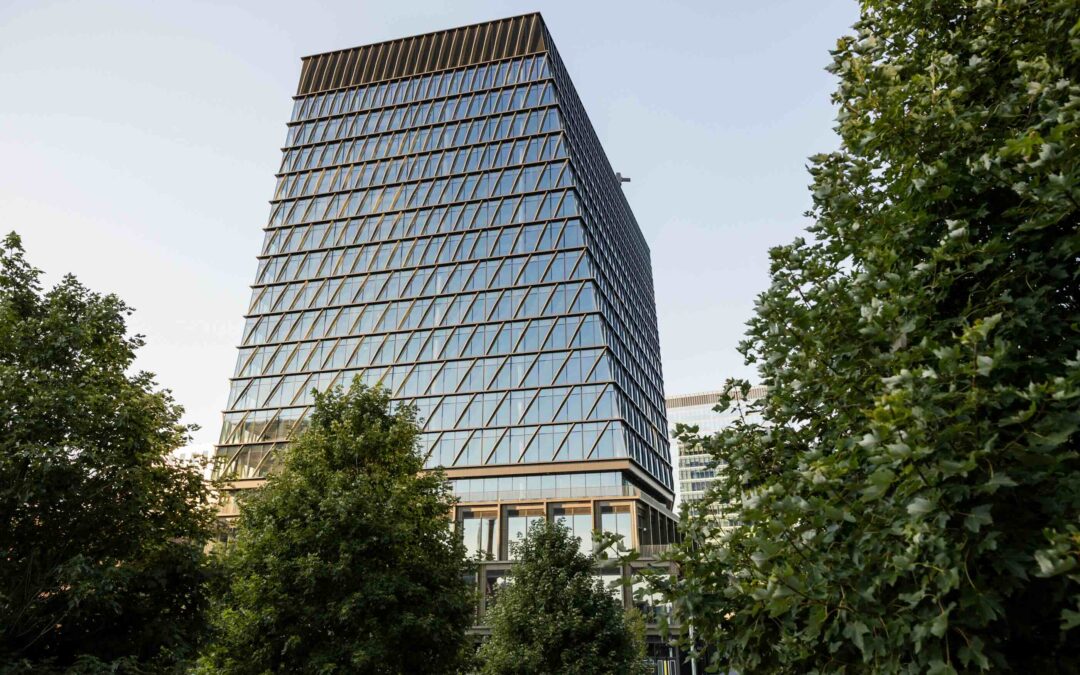
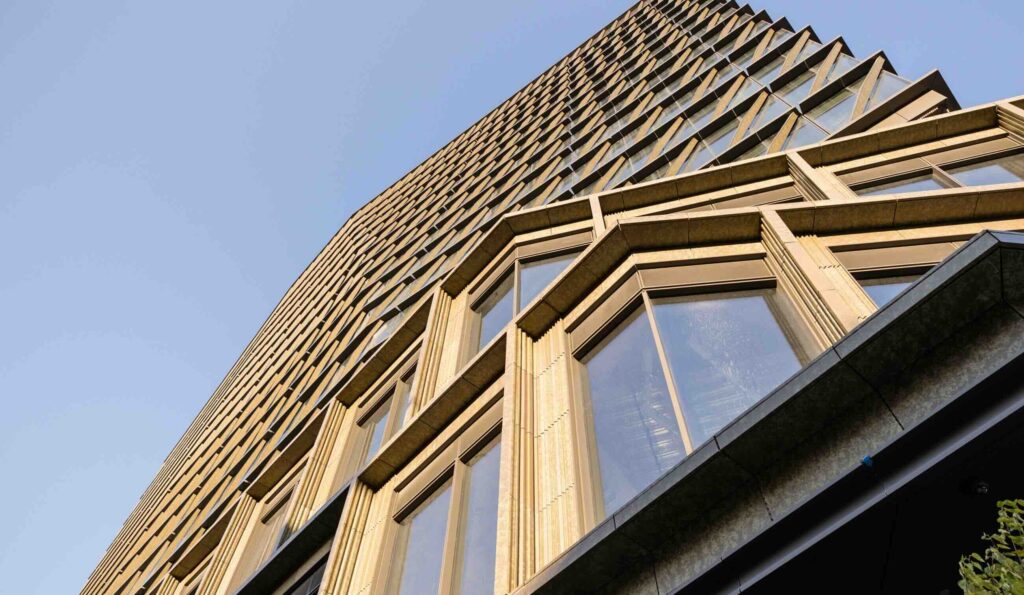
 Amazon has fully leased the office space as part of its Boston Tech Hub, which also occupies WS Development’s 111 Harbor Way building (completed 2022).