The following post was provided by Turner Construction.
Boston exhibit shows low-carbon construction is ready now
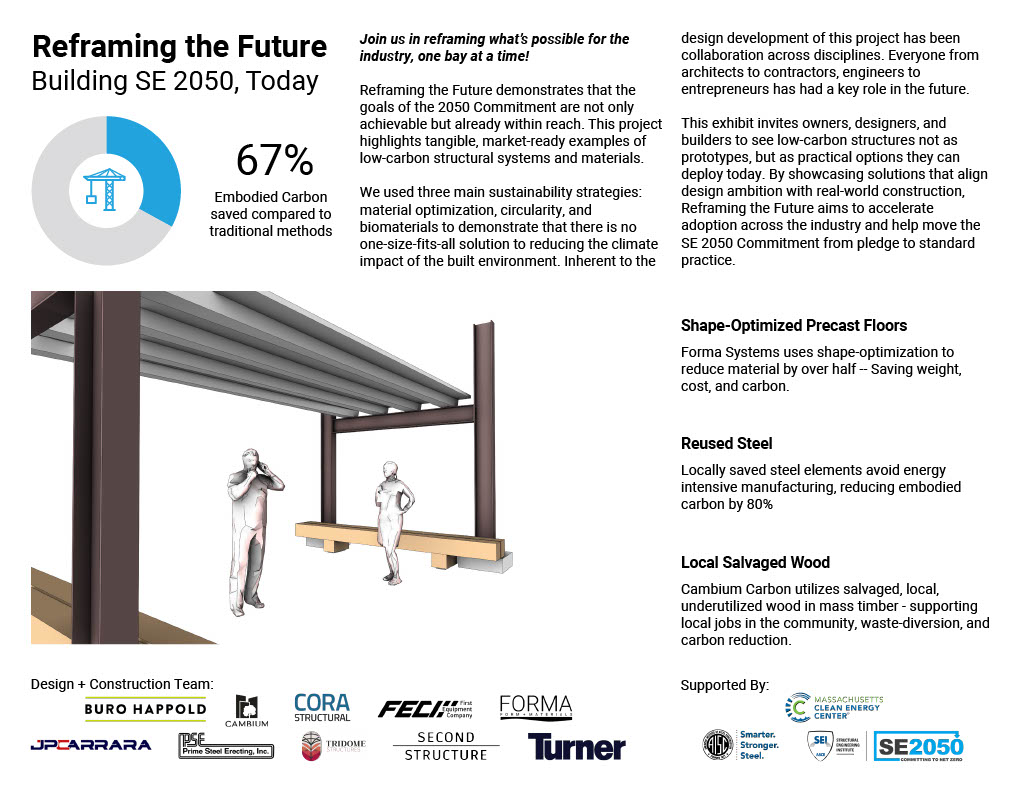
A temporary pavilion was constructed as part of the Structural Engineering Institute’s Structures Congress, “Reframing the Future: With Low-Carbon Construction.” It brought together a nationwide collaborative team to demonstrate that high-performance, low-embodied-carbon building systems are no longer theoretical, they are ready for commercial use today.
The exhibit serves as a physical example of how sustainable construction can be achieved using materials and systems that already exist. It incorporates principles of a circular economy – reuse, biogenic materials, and design for deconstruction, offering a practical roadmap toward a more sustainable built environment.
Organized in partnership with Buro Happold, Cambium Carbon, Forma Systems, Second Structure, Turner Construction Company, and MIT, the project comes five years into the SE 2050 Commitment and stands as both proof-of-concept and a call to action.
The idea and strategy: At its core, the pavilion-like structure highlights three key strategies for reducing carbon in construction: material optimization, circularity, and biomaterials, visually demonstrating how these approaches can work together to deliver meaningful impact.
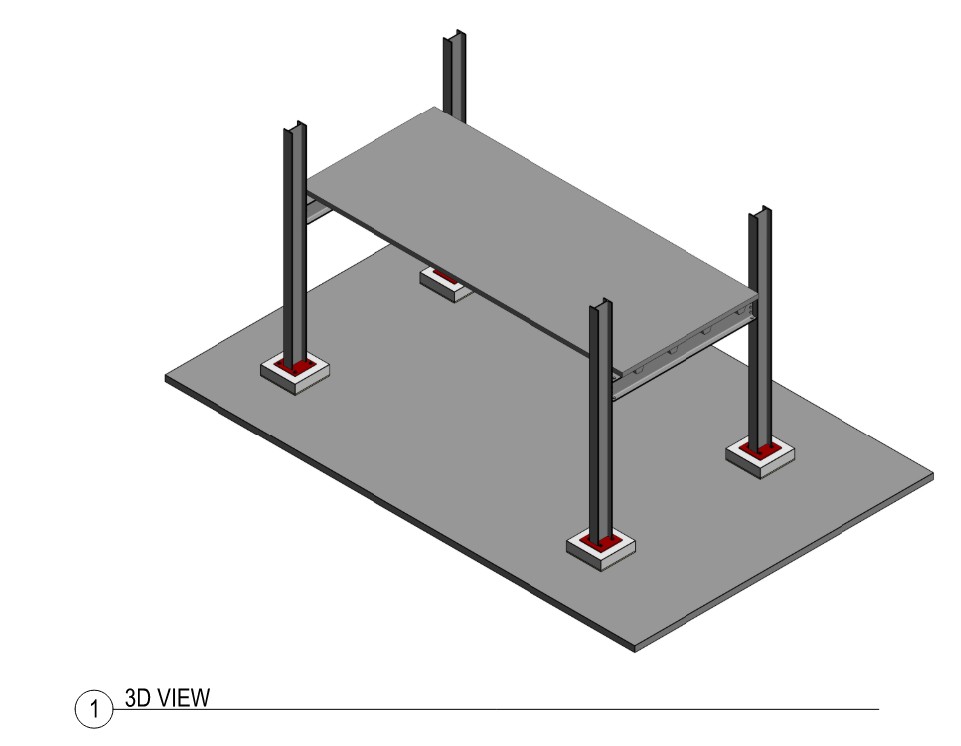
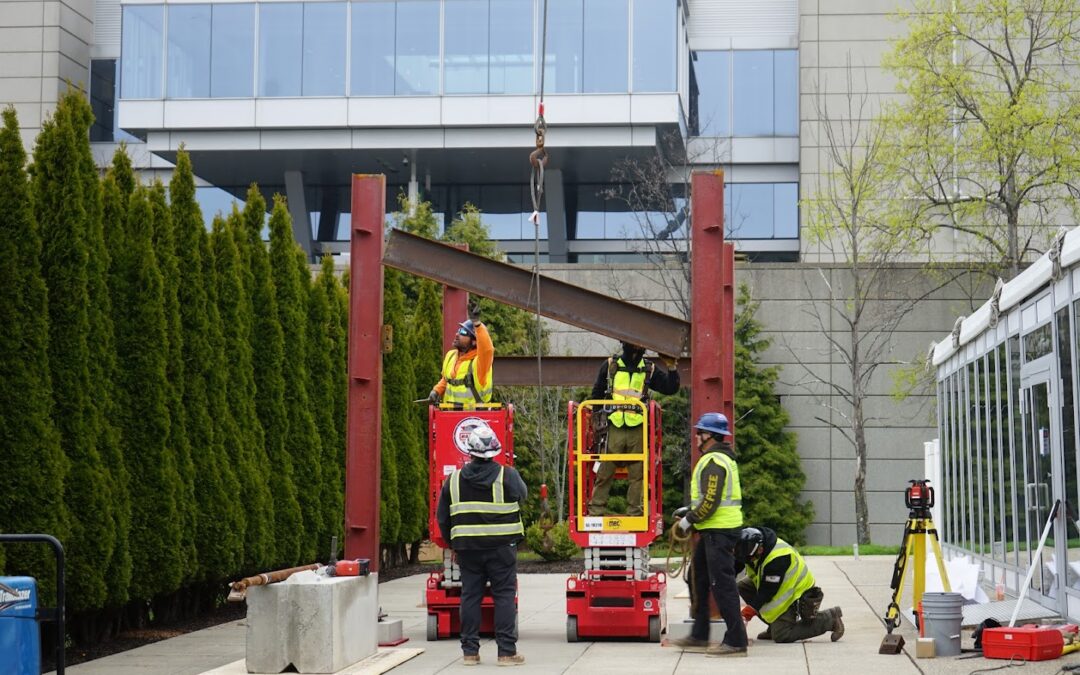
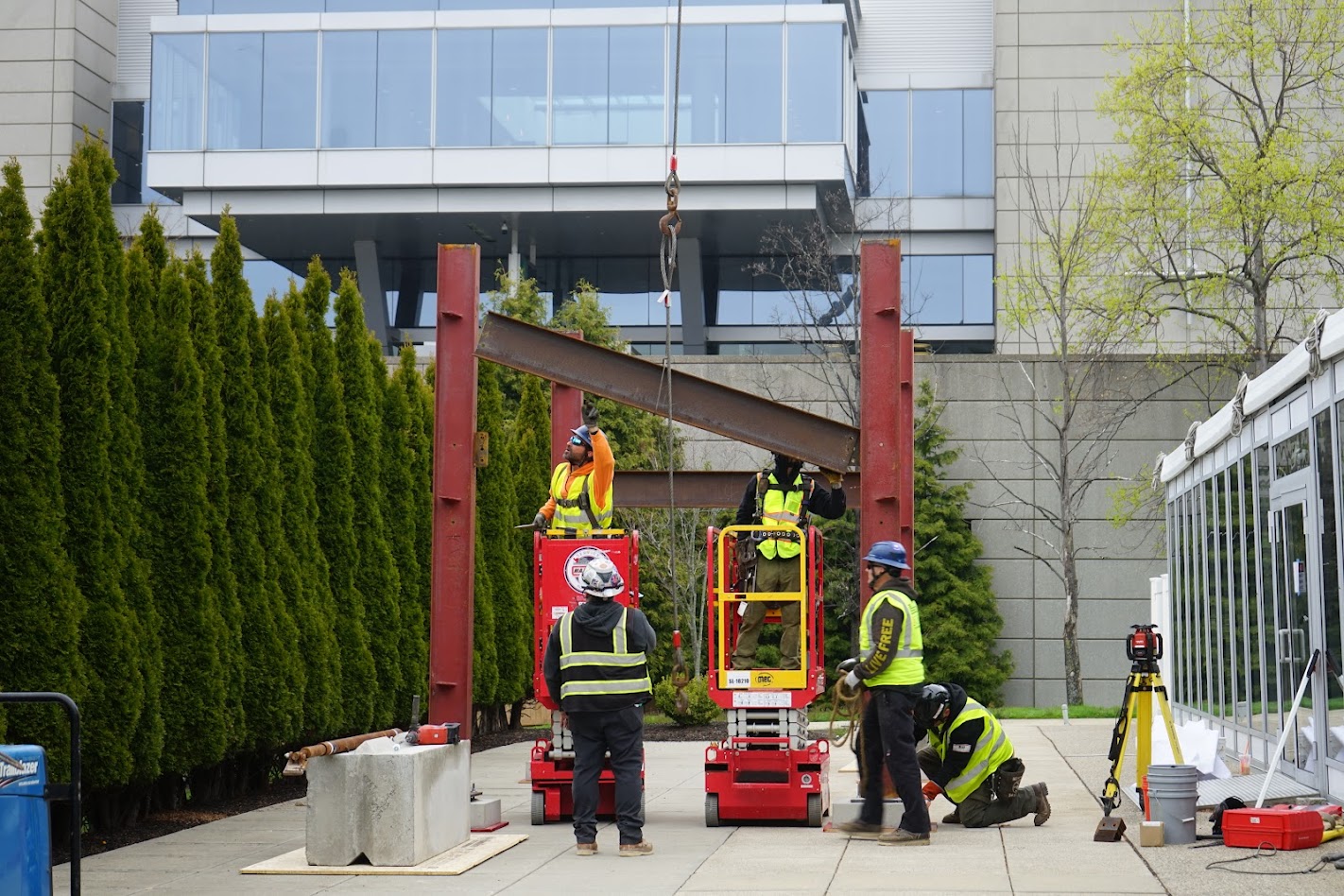
Reused steel: The structure also showcases reclaimed steel sourced from a nearby deconstruction project. While steel is commonly recycled, reuse eliminates the need for energy-intensive melting and recasting, preserving the material’s embodied carbon and reducing demand for new resources. All steel used in the exhibit traveled just over 60 miles, and every connection was designed to be demountable, allowing the structure to be disassembled and reused in future installations.
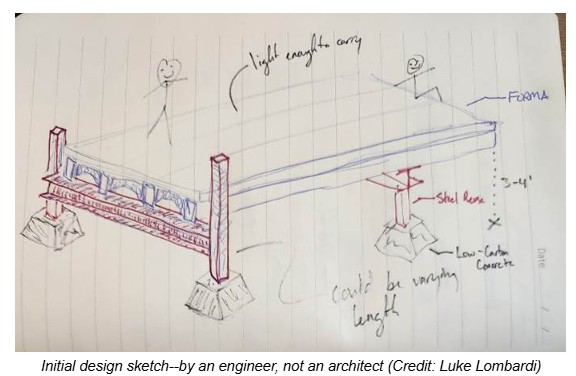
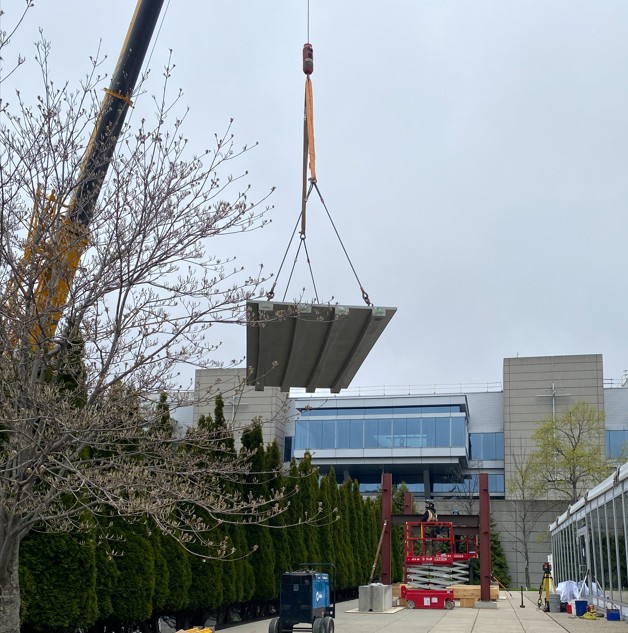
Optimized precast: At the center of the exhibit is a shape-optimized, reinforced concrete floor slab developed by MIT spinoff Forma Systems. Designed to deliver the same structural performance as conventional systems while using significantly less material, the slab is lighter, shallower, and can reduce carbon emissions by up to 70 percent. The multi-ribbed slab is just 6¾ inches deep and weighs roughly half as much as a comparable system – reducing foundation demands, transportation costs, and installation time.
Salvaged wood: The project also incorporates salvaged wood supplied by Cambium Carbon, sourced locally and manufactured into glued-laminated timber beams by Tridome Structures. The approach supports local jobs, reduces waste, and stores carbon all while maintaining a strong connection to place.

The final assembly: Together, these strategies form a fully code-compliant, permitted, and insured prototype that demonstrates what is possible today.
Weighing approximately 3.5 tons, the structure is more than 50 percent lighter than a comparable cast-in-place concrete system and is estimated to reduce its carbon footprint by two-thirds.
Perhaps most importantly, the exhibit underscores that achieving low-carbon construction at scale requires coordination across the entire supply chain, from material sourcing to final assembly.