Phius Certified Rater & Verifier Training
This ~40-hour hybrid course prepares quality assurance/quality control (QA/QC) professionals to inspect, test, and document passive building projects pursuing Phius Certification.

This ~40-hour hybrid course prepares quality assurance/quality control (QA/QC) professionals to inspect, test, and document passive building projects pursuing Phius Certification.

Explore Massachusetts Stretch Energy Code envelope requirements for commercial and multifamily buildings, focusing on passive design, thermal performance, air tightness, condensation control, U-factor calculations, and component performance compliance to support net-zero emissions goals.
Learn how to navigate Massachusetts’ energy code, meet new building envelope requirements, and apply proven value ranges through practical examples and early project planning strategies for building industry professionals.
Discover how circular construction and demolition waste practices reduce embodied carbon, minimize landfill waste, and lower project costs without compromising budgets or schedules.
This training is intended for Architects and Engineers. CPHCs learn to design to the Phius Certification climate-specific building standard. Projects earning Phius certifications (Phius CORE, Phius ZERO and Phius REVIVE) follow RESNET QA/QC protocols and achieve excellent HERS scores, US Department of Energy Zero Energy Ready Home status, and adhere to EPA indoor airPLUS requirements.

The Phius Certified Builder Certification is for tradespeople and construction professionals with field experience in construction and/or high performance building. This training prepares construction professionals to understand passive building techniques — airtight enclosures, high-performance window installation, passive design strategies, field quality assurance, and site management. For a project pursuing Phius Certification, these professionals ensure the building is built and operating to the plans and specifications. They are responsible for executing air-sealing and thermal bridge mitigation.
Join the virtual BE+ Carbon and Energy Roundtable, a venue for architects, designers, construction managers, and sustainability professionals to discuss issues related to carbon and energy in buildings.
This training equips U.S. design and construction professionals with the knowledge and skills to apply the international Passive House (PHI) Standard across building types, combining live instruction, exam preparation, and essential resources to prepare participants for the CPHD/C professional certification exam.
Join the BE+ Health and Wellness Roundtable, a venue for architects, designers, construction managers, and sustainability professionals to discuss issues related to healthy buildings.
The BE+ Emerging Professionals is a community of ascending professionals across the green building industry and allied fields helping drive sustainable and regenerative design, construction, and operation of the built environment.
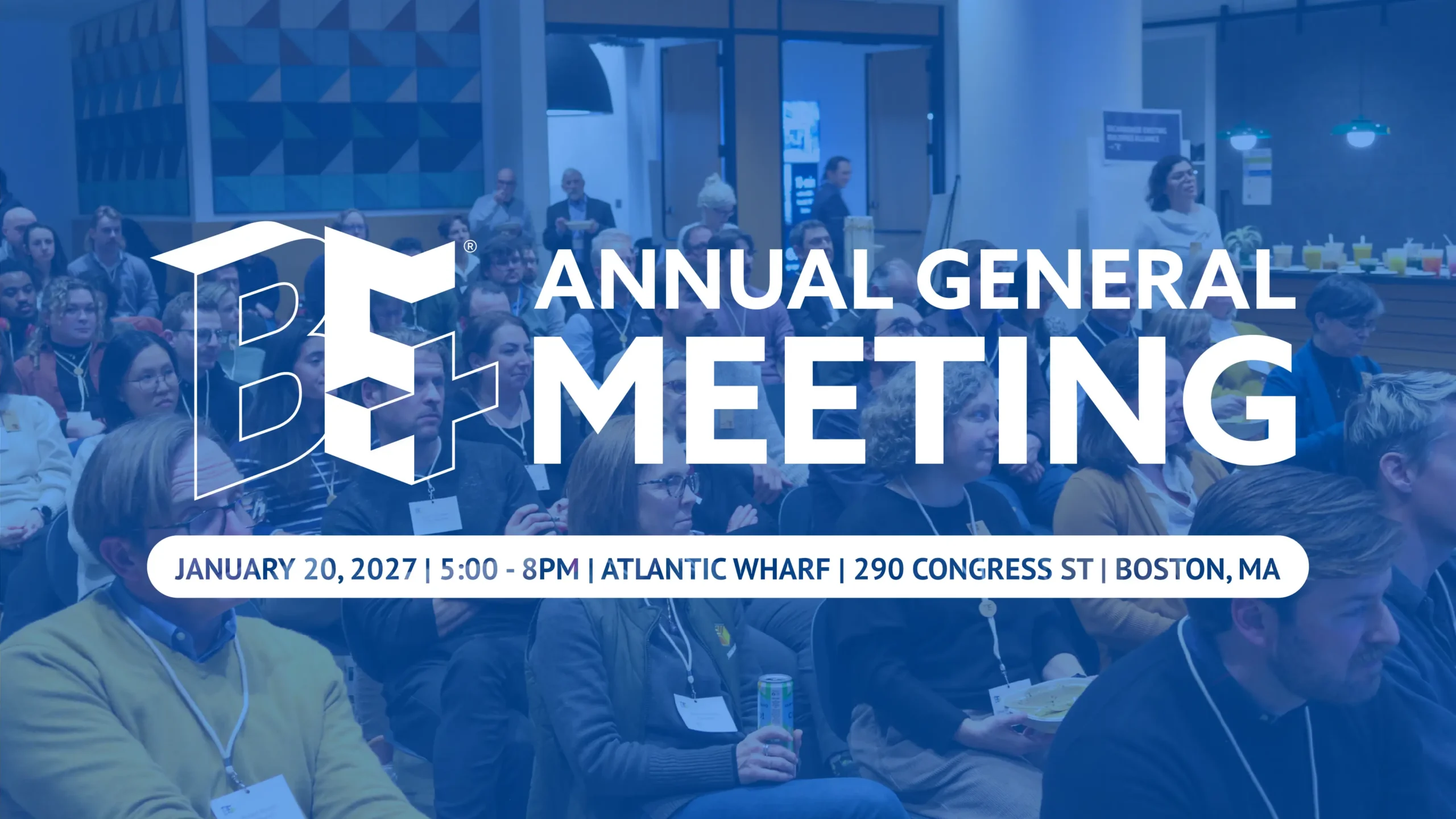
It’s that time of the year again when we all come together to celebrate the members, volunteers, and successes that make our BE+ community amazing! We’re ringing in the new year with board elections and an award ceremony for our members.
Learn how to use THERM software to evaluate thermal bridges, heat transfer, and moisture risk in building enclosure details. This 10-hour live virtual course teaches building professionals how to analyze the thermal performance of opaque assemblies and fenestration systems, identify condensation and mold risk, and improve energy-efficient detailing.
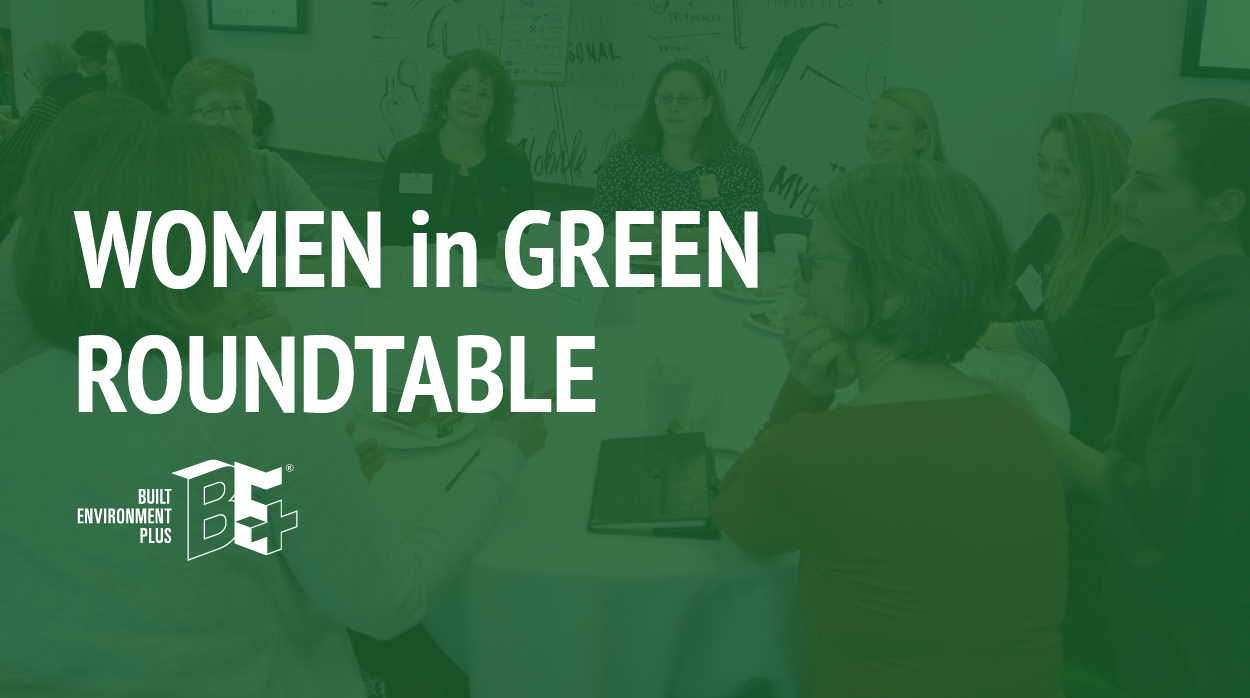
The BE+ Women in Green Roundtable is a venue for architects, designers, construction managers, and sustainability professionals to collaborate as Women in the industry.

Prepare for the LEED AP Building Design & Construction (BD+C) exam with expert training. Learn LEED BD+C credits, requirements, calculations, rating system components, and exam areas including Recognition, Application, and Analysis.
This course provides an in-depth exploration of carbon emissions in the built environment, offering a foundational understanding of key concepts, strategies, and principles. Participants will examine the global carbon cycle and its relationship to the built environment, covering both operational carbon (including grid emission factors and electrification strategies), embodied carbon (including carbon storage and emission reduction strategies), and the relationship between the two.
This course covers the 225 CMR 23.00 MA Commercial Stretch and Opt-in Specialized energy codes applicable from July 1, 2023 and including February 2025 updates. The presentation encompasses the different pathways available for code compliance, requirements for each section (envelope, mechanical, plumbing, and electrical), and an overview of how the different components work together. Participants will also learn how the Fossil Fuel Free Pilot communities program may use the Stretch Code as a tool to help meet building performance and electrification goals. This course is intended for all building industry professionals, including but not limited to architects, engineers, consultants, modelers, developers, owners, and contractors.