This past year we had unprecedented advances in the evolution of our organization. After doing a lot of listening through roundtables and member outreach, we developed a whole new strategic plan, a new brand that reflects our focus on healthy, net positive communities, and expanded partnerships with aligned organizations such as the Living Future Collaborative New England and Passive House Institute.
Addressing carbon is one of our most urgent challenges for 2020. While this challenge and others can feel overwhelming and impossible to overcome, we make up a powerful community of individuals involved in the design, construction, and operation of our buildings. Each of us came to USGBC MA because we are all driven by the same mission: to advocate for a more sustainable Massachusetts. That’s why community is important. Together, our community has all the know-how and experience to chart a path forward that can help us accelerate our progress. Together, we can achieve what none of us can do individually.
This is why we really want to hear from you: we can’t do all of this without the support and input of our community! What do you want us to focus on this year? Does your company need training or support to achieve its sustainability goals? What do you want to learn this year? How can your voice be joined with other like-minded people to drive the changes we want to see? Come to our roundtables, other events, or just send us a message—we look forward to working with you to make 2020 the best year yet!
Barbra Batshalom, USGBC MA/Build Environment Plus Board Chair
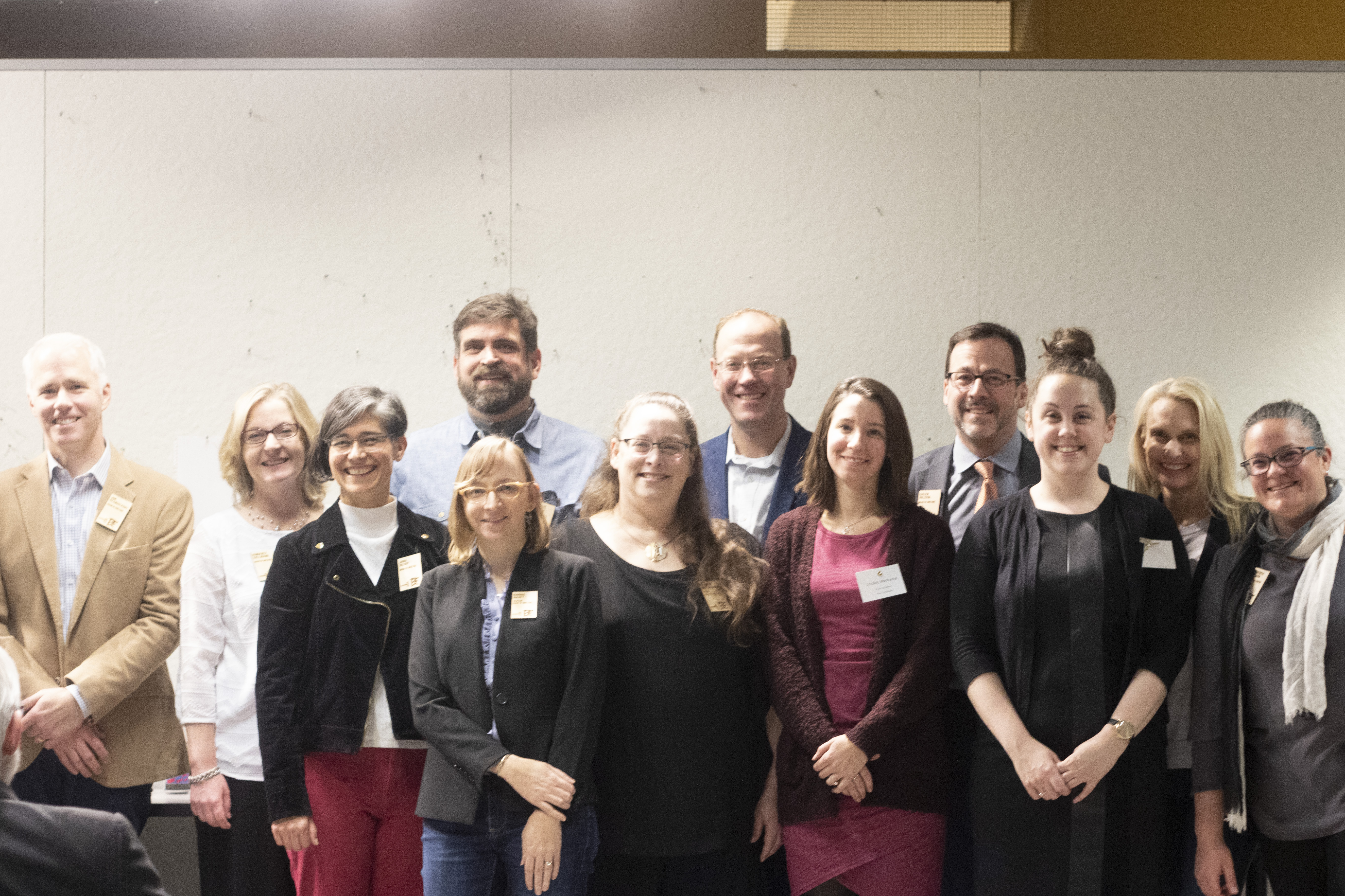
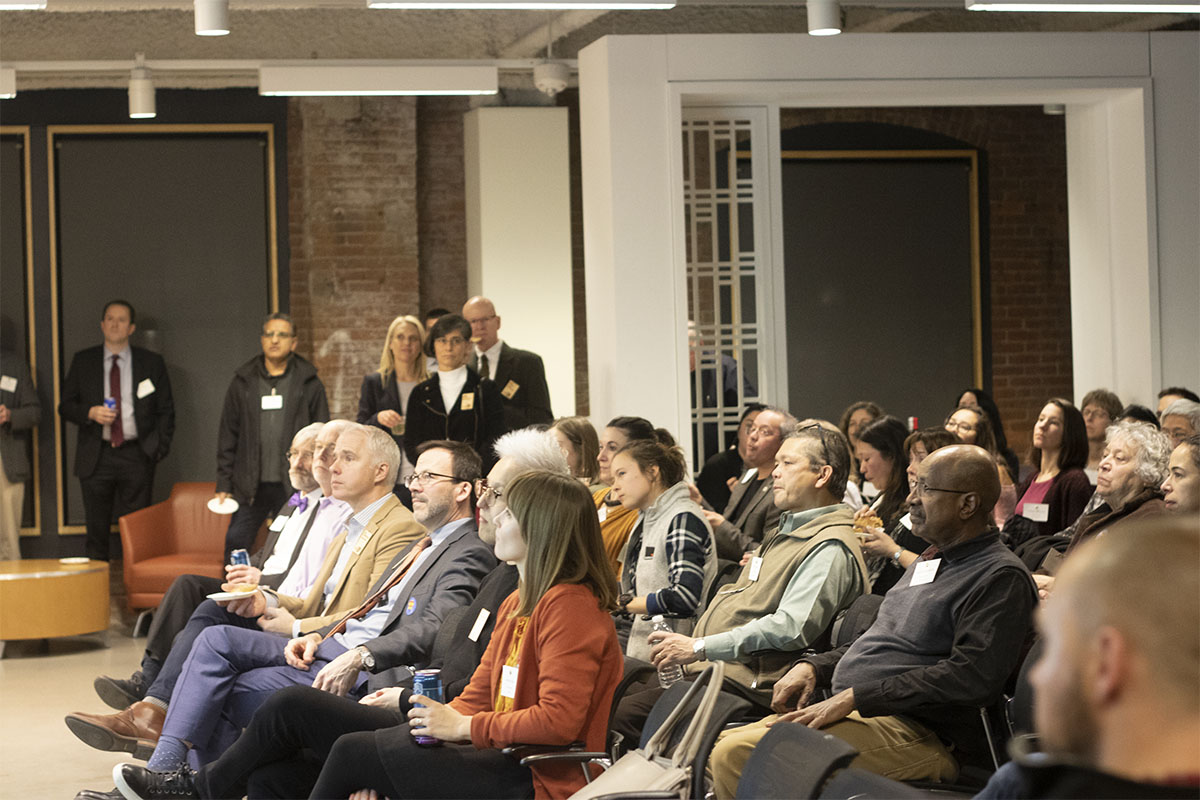
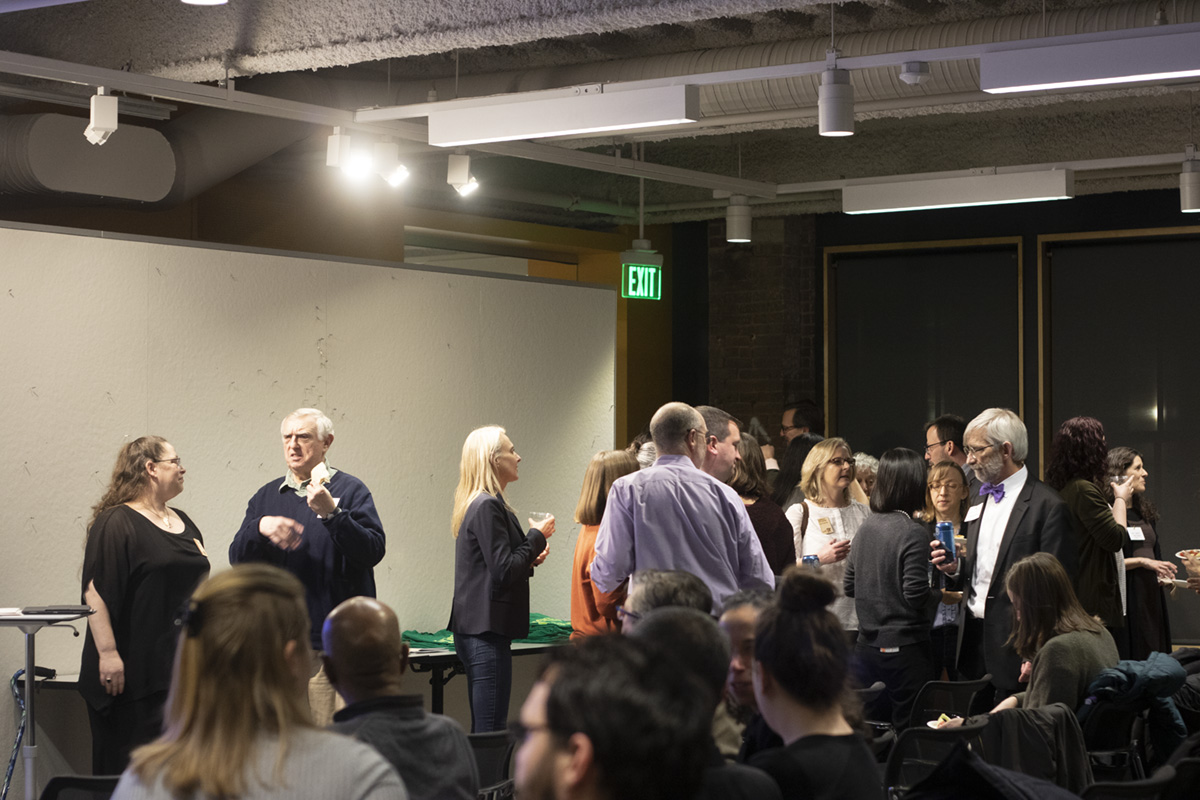
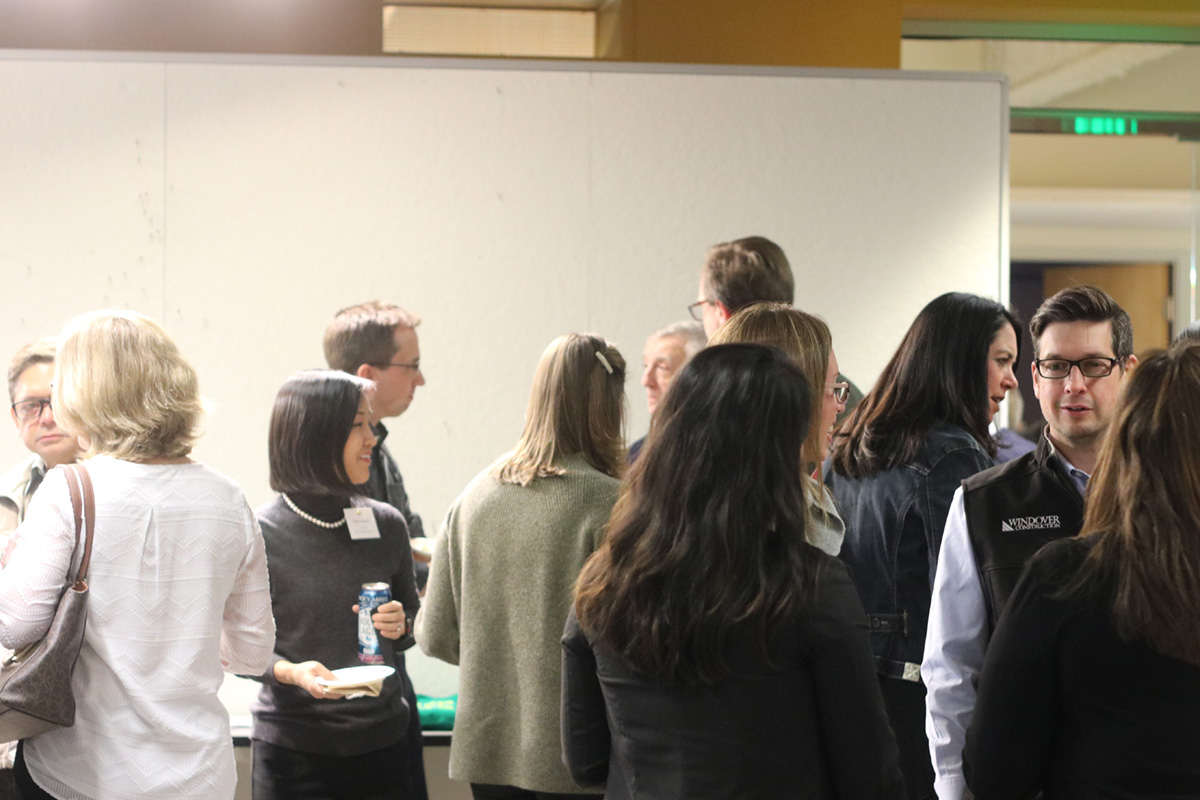
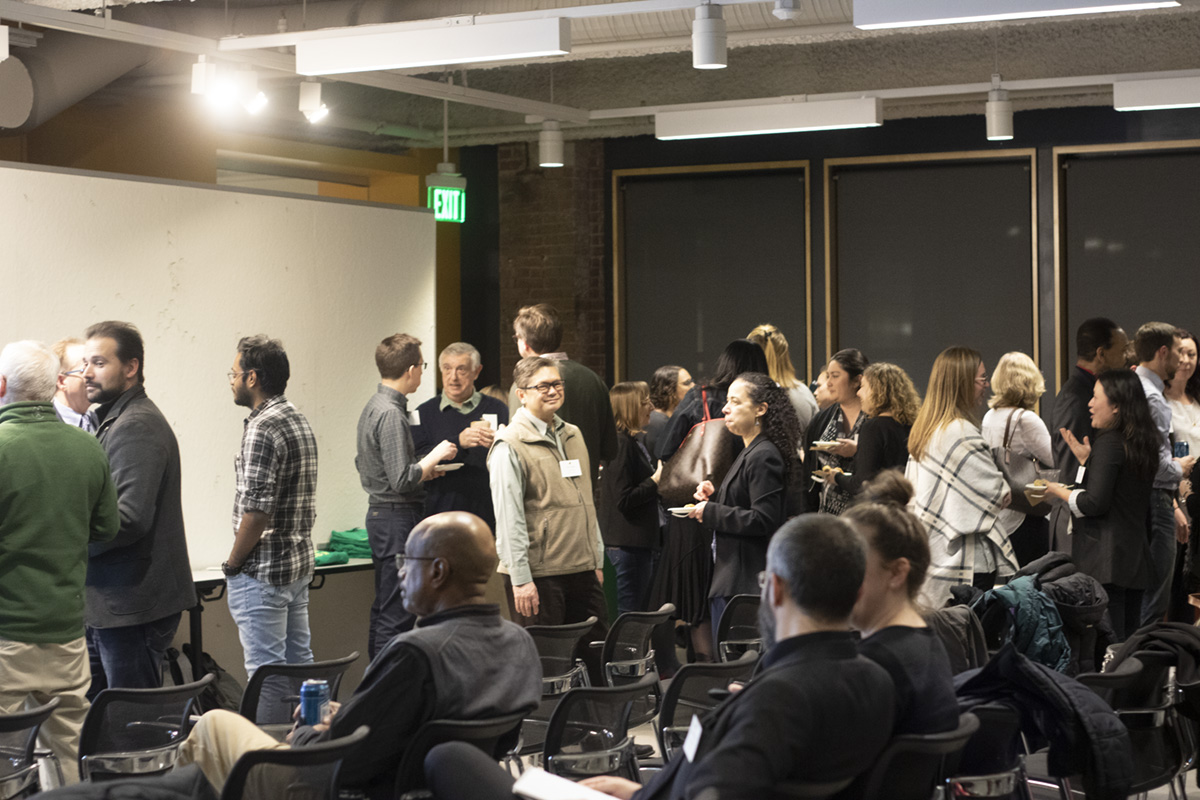
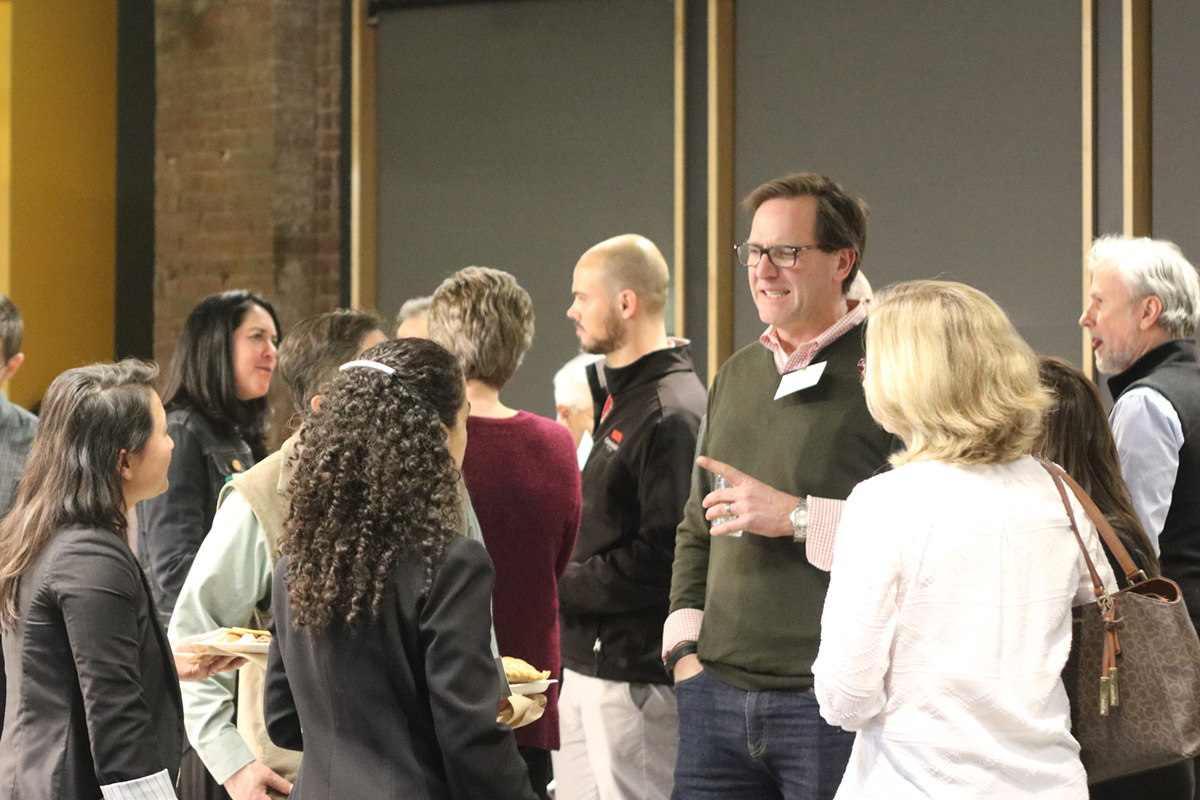
Annual General Meeting Recap
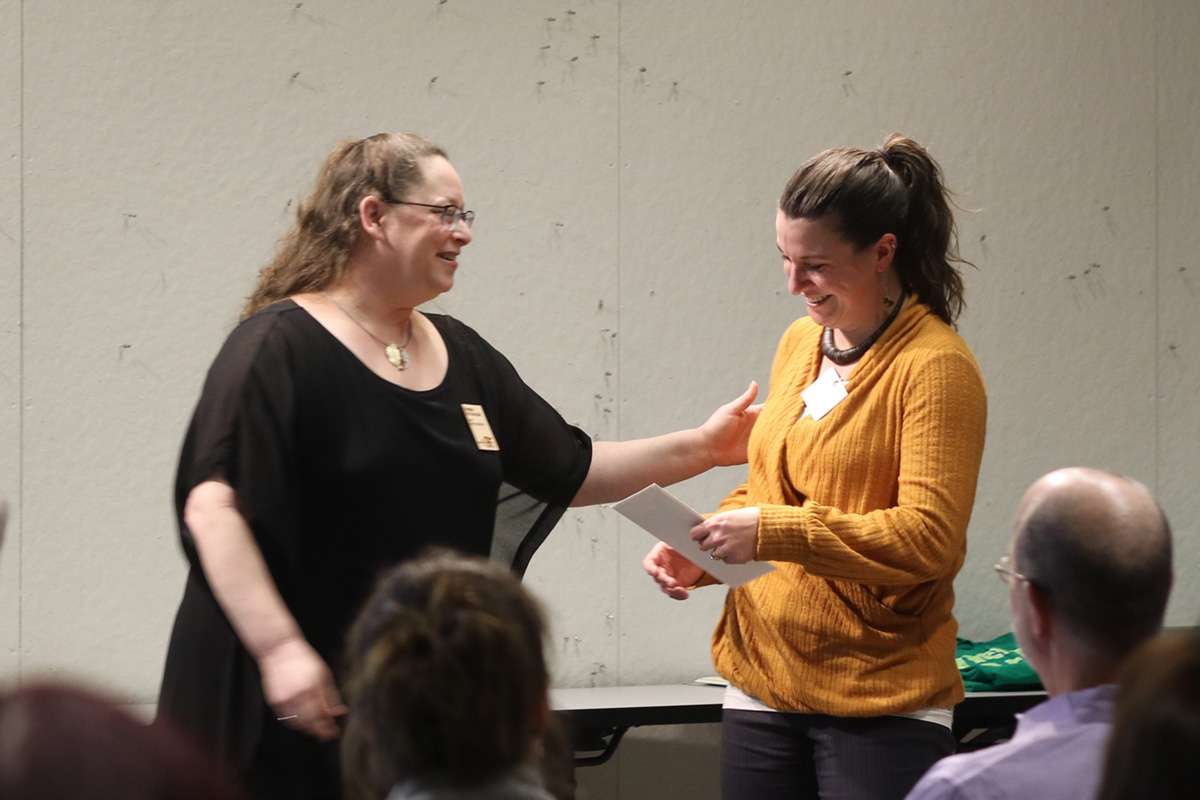
2019 Membership Award Recipients
Net Zero Hero – Jacob Knowles
Member of the Year – Audrey Ng
Ascending Professional of the Year – Jasmine Abdollahi
MVP Company – Elkus Manfredi
Living Building Champion – DiAnn Mroszczak
I’ve Got Your Back – Jana Silsby
Thank You to Our Departing USGBC MA Board Members
Samira Ahmadi
Jenna Dancewicz
Henrietta Davis
Johanna Jobin
Returning USGBC MA Board Members
Jana Silsby
Architect Representative
Brad Mahoney
Developer Representative
Galen Nelson
Clean Tech Representative
Jenn Taranto
Contractor Representative
New USGBC MA Board Members
Lindsey Machamer
Emerging Professional Representative
Julie Janiski
Engineer Representative
Randa Ghattas
Unspecified Open Seat Representative
Heather Henriksen
Unspecified Open Seat Representative
Built Environment Plus: Voting Results
The results are in: changing the organizational name to Built Environment Plus was met with an overwhelming 90% approval rate by USGBC MA voters! We will be going before the Secretary of State to petition for the name change. If the petition succeeds, Built Environment Plus will become our official name! Thank you to everyone who voted–as a community-based organization, your input is vital for the future of the organization!
[responsivevoice_button voice=”US English Female” buttontext=”Listen to Post”]
Written by Jonathan Carey
At our recent Emerging Professionals meeting, we were treated to a presentation by Roland Jenkins called “Bringing Sustainability to Life.” Roland Jenkins is currently an Assistant Project Manager of B.W. Kennedy & Company located in Arlington, Massachusetts and his presentation was on the LEED certification for the lab and biotech facility located on 828 Winter Street in Waltham.
The featured facility is a 144,000 sq. ft. core and shell building specifically designed for life science and would be attached to a four-tier parking garage covering over 155,000 sq. ft. that would seat over 500 cars total.
For the construction, a submittal process was necessary. The submittal process helps with the procurement of building materials. There was also the need for monitoring of the job site operations in order to conduct site reports, which would all go towards compliance confirmation of the construction phase. All of these steps were tracked and documented throughout the procedure.
The final phase involved the LEED verification and certification. A compilation of LEED documents were compiled together for the final steps. All of these documents would be used for the final project that was submitted to GBCI, who would conduct their final review decisions. Once the decisions were made, a final LEED certification was implemented for the building through an end-user program.
At the end of the day, the new lab and biotech facility scored a total of 51/110 for LEED certification requirements. Thus, the building earned a Silver LEED certification overall. Roland explained how the building met the National Grid and Eversource requirements for energy conservation and through the MEP energy modeling and reductions, they were able to provide significant rebates to the clients. Other than that, there were also considerable energy savings over the life of the building itself.
Some of the value engineering that took place helped reduce equipment components and defer equipment installs was well. Some of the other plans that were in place included the Stormwater Pollution Prevention Plan (SWPPP), Construction Waste Management Plan, and the Indoor Air Quality Plan. All of these factors were considered when utilizing the LEED certification model for the new lab and biotech facility on 828 Winter Street.
Thanks again to Roland Jenkins for the informative presentation on the new life sciences building in Waltham. It was great to see the building earn a silver LEED certification for sustainability.
[responsivevoice_button voice=”US English Female” buttontext=”Listen to Post”]
Written by Aliza Vaida
February’s EPMA presentation delve into the key terms and concepts necessary to understand battery storage and how battery storage is vital for renewables, like solar and wind, to become the dominant energy source for the world.
The first part of the presentation reviewed the key metrics and economics to understand and consider when thinking about battery storage coupled with solar energy for the residential and commercial market. When looking into a storage solution, one needs to consider how much energy the battery can discharge, how long it will last and other key elements. Besides having a lot of new concepts to consider, another challenge with battery storage today is that it is quite expensive, ranging from $10,000-$20,000 for residential, and usually only lasts around 10 years. There are benefits to getting battery storage today, like if you live in storm prone areas or have time-of-use rate plans. In general however, battery technologies are just too expensive for most people.
But times are changing! Battery storage is expected to drop significantly over the next 10 years making it a possibility for more home owners, businesses and utilities. Currently solar only works when the sun is shining, when batteries become the norm the world will be come a much more resilient place. We will be able to power the built environment with renewables during the day and fill up the storage as well. And then during the night hours batteries will be able to power the built environment, closing the loop. Storage will allow redundancy so resiliency within our current energy grid. Imagine a world where if the grid goes down because of a natural disaster, key institutions like hospitals, fire departments and schools, can link up together and still be powered by solar plus storage. Individual’s homes will be able to be islanded off from the grid, because of solar plus storage, allowing autonomy during a grid failure as well. Storage is the piece that will enable a clean energy future.
[responsivevoice_button voice=”US English Female” buttontext=”Listen to Post”]
Written by Kara Slocum
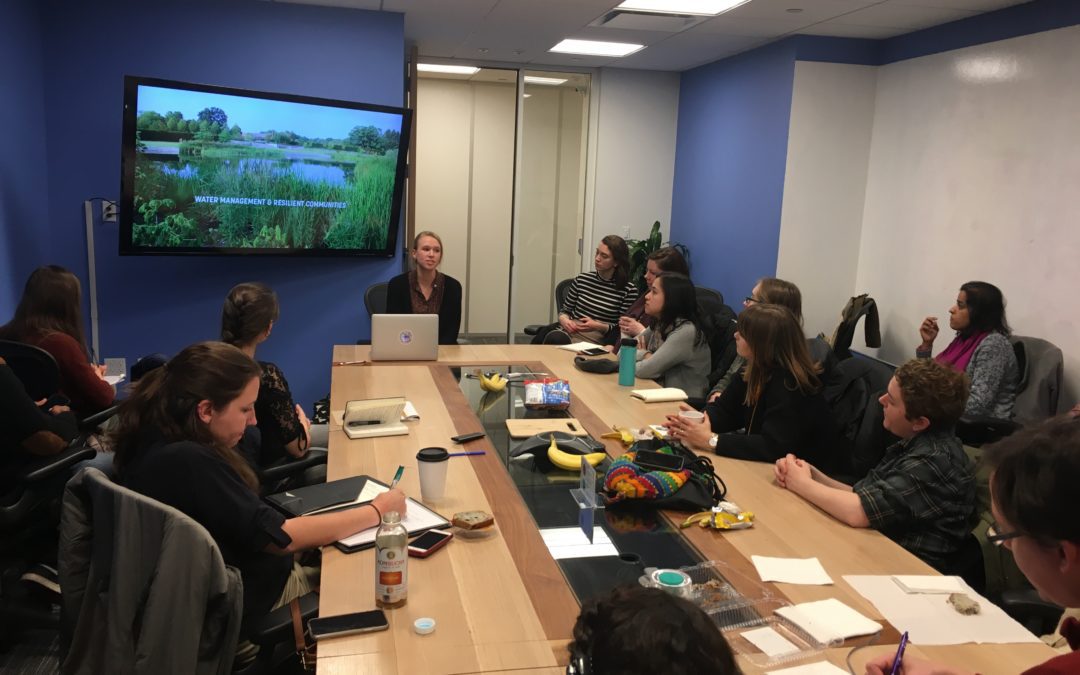
The presentation focused on different aspects of water management and its importance in Sasaki design of the built environment. This brief intro into water management featured two case studies which highlight Sasaki’s cross-disciplinary and analytic approach within different development types and design phases.
The Sarasota Bayfront Master Plan guides future improvements to a 53 acre waterfront park as a cultural and economic legacy for the region while ensuring open, public access to the Bayfront. The sites program and design were developed in parallel with a detailed analysis of sea level rise and storm surge. By applying this analysis to concept level planning, we could root our design decisions in resilient thinking.
The Hoosic River Flood Chute Revitalization is a concept plan to address the existing, but aging, concrete chutes that protect North Adams, MA from historic flooding. The Sasaki team worked to examine how to restore the river, enhance public access to the water’s edge, and rethink the flood protection strategy. The restoration strategies celebrate the Hoosic River, while maintaining or exceeding the existing level of flood protection.
The EPMA group was active with questions and eager to understand how water plays a role in design. We were able to connect, collaborate, and explore on the topic of water and the importance of resilient design.
[responsivevoice_button voice=”US English Female” buttontext=”Listen to Post”]
Written by Kelsey Margulies
At last week’s USGBC EPMA meeting I presented three works by Maryann Thompson Architects. MTA’s portfolio specializes in architecture that is sustainable, regionally driven, and that attempts to heighten the phenomenological qualities of the particular site. These three projects especially demonstrate how environmentally-friendly principles become another layer in the overall human experience.
The Walden Pond Visitor Center, built in 2016, is a net-zero consumption building that implements passive solar principles. The wooden structure blends seamlessly into the surrounding landscape while solar panels over the nearby parking lot provide year-round energy. Geothermal House, built in 2006, also shows how passive solar principles can be integrated in contemporary residential design. The activities within the house follow the path of the sun throughout the day, beginning on the East-facing kitchen and concluding on the West terrace. Zero Energy House, also built in 2006, was the first LEED certified single-family residence in Massachusetts. The 3-bedroom, 3-bath, open floor plan home reveals how new construction can be accomplished within a reasonable budget.
Sustainability is not necessarily only about energy consumption and material resources, well-designed structures also create a sense of permanence. Whether a single family home or a program open to the public, most buildings are intended to last at least a few generations. Constructing well-loved spaces with a lasting positive experience is an essential consideration in sustainable design.